Roof Repair in Mountain View, CA
Quick answer
Roof repair in Mountain View is a detail discipline: flashing at chimneys and skylights, vent boots, and the seams where additions meet original roofs. Winter rain finds these points in order, and the repair scope names the detail, not just the leak stain below it.
In Mountain View, roof Repair is read against the stock it serves: postwar ranch homes, Eichler tracts with low-slope roofs, older downtown bungalows, and newer infill homes, most with composition shingle or foam over the original deck. With mild Mediterranean weather, a concentrated winter rain season, marine layer mornings, and dry summers, the local order of work is set before price, and the written scope names that order.

How we approach this job
Diagnosis and insurance documentation: For roof repair in Mountain View, the buying situation is a problem with a cause: find the real source, document it with photographs and readings for any claim, and only then price the fix.
Signs you need roof repair
- A ceiling stain that grows after rain. It usually means the covering or a detail has failed and water has a path in.
- Shingles or tiles on the ground after wind. It usually means the field is losing material and the underlayment is being tested.
- Granules collecting in gutters and at downspouts. It usually means the roof is shedding its protective mineral layer faster than it should.
- Daylight or damp decking visible in the attic. It usually means water or light is reaching the attic, which means the assembly is open somewhere above.
What the job involves
What affects the price
- The failed detail: flashing, valley, vent, or field material
- Layer count and the condition of what lies beneath
- Slope, access, and story height
- Whether a section or the full roof is the honest scope
- Permit requirements for replacement work
When it is an emergency
An open roof is an emergency in any forecast: one storm through a lifted section can wet ceilings, insulation, and wiring. Tarping is temporary protection, not a repair, and it should be priced as its own visit.
PLACEHOLDERRoof Repair across the Mountain View area
Related services
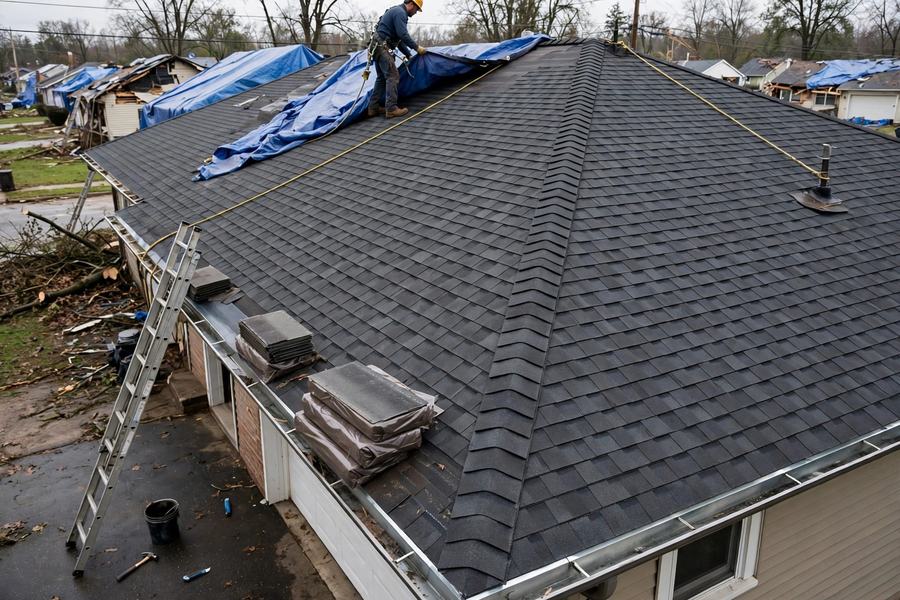
Emergency Roof Tarping
Emergency roof tarping in Mountain View happens between storm bands, when the next band is already on the forecast. Anchoring matters here: a tarp that lifts in the second band turns one leak into three.
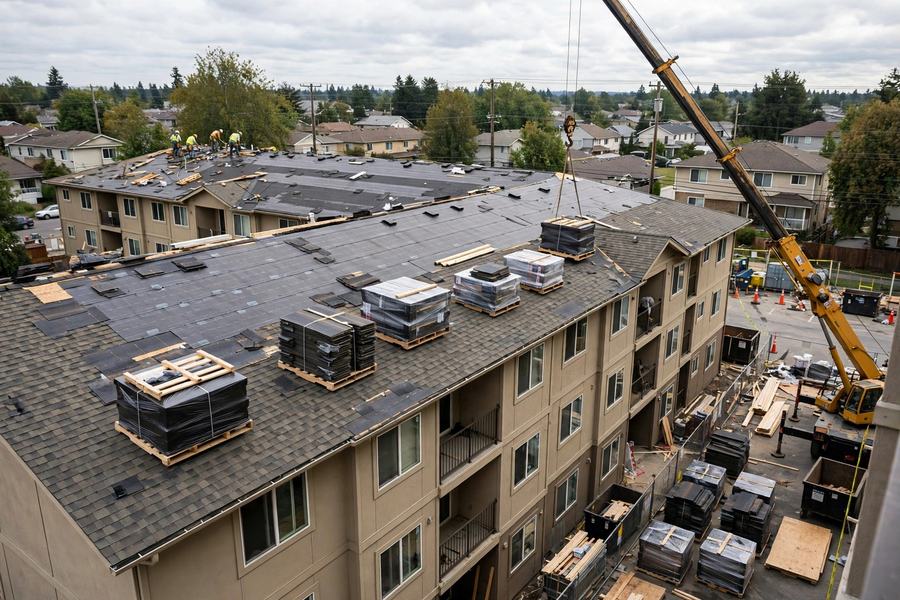
Commercial Roofing
Commercial roofing in Mountain View serves the low-slope stock along the El Camino and light industrial corridors, where ponding water and rooftop unit curbs write most scopes. Documentation for property managers is built into the process.
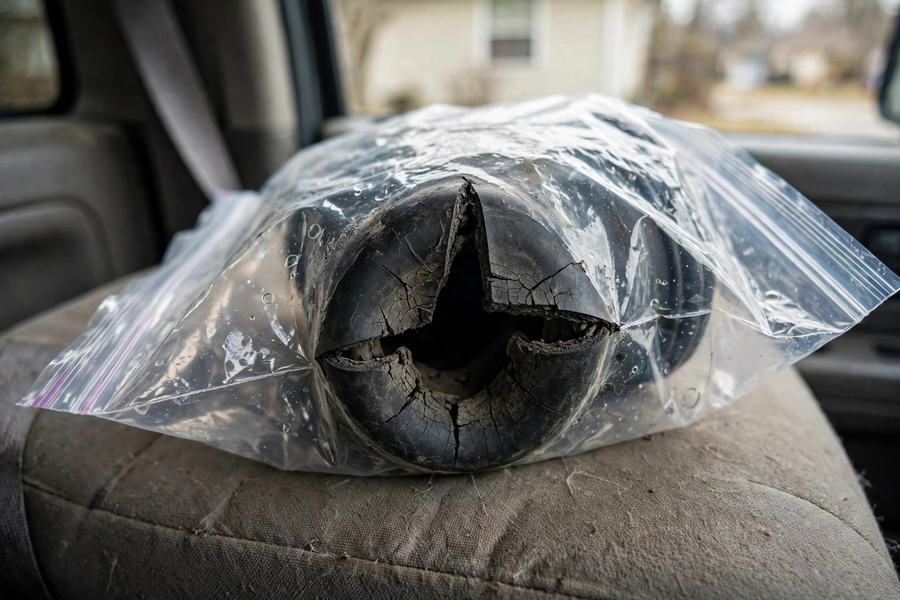
Roof Leak Repair
Roof leak repair in Mountain View starts in the attic, not on the roof: the stain map, the deck condition, and the daylight check decide whether the entry is a detail or a failing field.
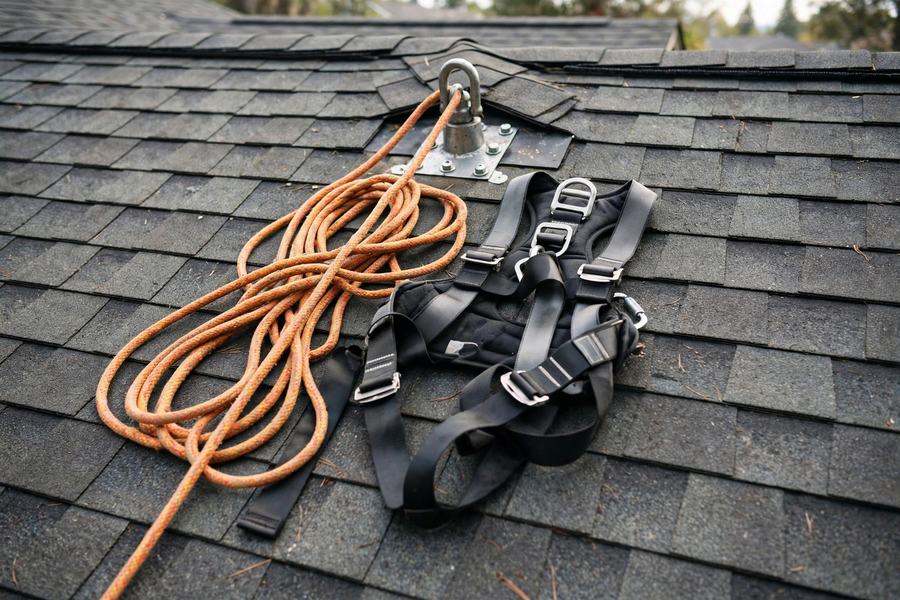
Storm and Wind Damage Roof Repair
Storm damage roof repair in Mountain View follows the winter bands: wind-lifted shingles on the shallow tracts, limb strikes under the oak canopy, and debris dams in every valley. The scope separates storm damage from wear, in writing, for the claim file.
Roof Repair questions, answered
When is roof repair an emergency?
An open roof is an emergency in any forecast: one storm through a lifted section can wet ceilings, insulation, and wiring. Tarping is temporary protection, not a repair, and it should be priced as its own visit.
What affects the price of roof repair in Mountain View?
The main price factors for roof repair are covered in the cost section above. The contractor confirms the exact price in a written estimate after seeing the job, and nothing is owed until you approve it. The call and the referral are free.
How much does roof repair cost?
Published national guides put minor roof repairs commonly between about $300 and $1,500, with the failed detail setting the figure. Full replacement is priced from the measured scope after a roof walk. In Mountain View, the local variable is this: winter rain finds aging flashing and low-slope seams first, and oak and eucalyptus debris holds moisture against the field of the roof between storms. The written scope after an in-person read is the number that matters.
Does insurance cover roof damage?
Sudden wind and storm damage are the commonly covered cases, subject to deductible and dated documentation. Wear, age, and a felt layer that has served its life are commonly excluded, so a good scope separates storm findings from wear findings.
Should I repair or replace my roof?
Repair when the failed detail is local and the field of the roof has years left. Replace when failures repeat across slopes, layers are spent, or the underlayment is at end of life. A roof walk with photographs should make the answer obvious.
Request a callback
Prefer to talk later? Leave your details and an independent local pro will call you back. No charge to you, no obligation.
Stevens Creek Roofing is a free referral service. Submitting this form connects you with independent local contractors who provide the work.